What You Need to Know
Wyoming Seat Belt Laws
In Wyoming, all drivers and passengers must wear a properly fastened seat belt in a motor vehicle. It is considered a secondary offense for adults, meaning law enforcement can only issue a citation if they pull you over for another violation. Stricter primary enforcement laws apply for children and infants.
Adults and General Passengers:
- Requirements: All drivers and passengers must be buckled up. Drivers are legally responsible for ensuring all passengers under 12 are secured.
- Enforcement: Secondary enforcement for anyone aged 9 and older.
Child Passenger Safety Laws:
- Requirements: Children under the age of 9 must be properly secured in a federally approved child-safety restraint system (car seat or booster) in the back seat of the vehicle.
- Enforcement: Unlike adults, law enforcement can pull you over if they observe an improperly secured child in the vehicle.
Source: Wyoming Statute 31-5-1402
Because Wyoming is a secondary law state, you can only be fined for not wearing a seat belt after being pulled over for another primary violation first.
Wyoming’s seat belt-use rate is consistently below the national average. As of 2025, the seat belt use rate was 80.5%, compared to 91.3% nationwide.
About WYSBC
Founded in 2015, the Wyoming Seat Belt Coalition (WYSBC) is serious about our mission to decrease incidences of injuries and fatalities in traffic crashes in our state by actively increasing the proper use of seat belts and child passenger safety seats. We believe that, by working together, we can drive Wyoming toward zero traffic deaths.
“Buckle up for Life, Wyoming” is the slogan for the Wyoming Seat Belt Coalition; it is not an organization.
The Wyoming Seat Belt Coalition comprises law enforcement professionals, community health officials, educational faculty, various industry representatives, and community safety advocates. These WYSBC members do what it takes every day to help Wyoming be a safer place to drive.
The Wyoming Seat Belt Coalition partners with law enforcement and health department agencies, when possible, by developing co-branded messaging assets to help increase seat belt use in their respective communities.
Child Car Seat Laws and Requirements
Child Passenger Safety Laws:
- Requirements: Children under the age of 9 must be properly secured in a federally approved child safety restraint system (car seat or booster) in the back seat of the vehicle.
- Enforcement: Unlike adults, law enforcement can pull you over if they observe an improperly secured child in the vehicle.
In Wyoming, a child can move out of an infant (rear-facing) car seat when they reach the maximum weight or height limit of the specific seat (usually 20–35 lb.) or when they turn 2 years of age, whichever comes first.
The safest car seat is the one that correctly fits your child, matches your vehicle, and is installed and used properly every single time. Because all car seats sold in the U.S. must pass rigorous federal safety standards, your focus should be on proper installation and fit.
Always consult your specific car seat manual and vehicle owner’s manual for exact guidelines. We strongly recommend your child’s car seat be installed by a certified technician. You can have your child’s car seat inspected for free at any SafeKids locations, law enforcement departments, fire stations, or hospitals that have a certified technician within your community.
You can have your child’s car seat inspected for free at any SafeKids locations, law enforcement departments, fire stations, or hospitals that have a certified technician within your community.
Booster Seat Laws and Requirements
In Wyoming, children under 9 years of age must ride in a properly secured child safety restraint system, including booster seats. Exemptions apply only if the vehicle has no rear seats, all rear seats are already occupied by other children, or the child has reached a height of 57 inches.
To ensure proper belt fit, choose a high-back or backless booster that matches your child’s height and weight. The lap belt must sit flat and low across their upper thighs, not their stomach. The shoulder belt must cross the center of their chest and collarbone, avoiding their neck.
Transitioning to a booster seat should not be rushed. Experts recommend keeping your child in a 5-point harness as long as possible. The switch to a booster seat depends on the following minimum requirements and signs of maturity.
- Weight: At least 40 lb.
- Age: At least 4 to 5 years of age
- Height: Your child has maxed out the top height or weight limit of their forward-facing car seat
- Maturity: They must be able to sit properly for the entire ride without leaning, slouching, or playing with the seat belt
In Wyoming, a child is legally required to use a child safety restraint system, which includes a booster seat, until they reach their 9th birthday.
Before a child can safely transition out of a booster seat and use a standard adult seat belt, they should meet the standard safety guidelines:
- Height: At least 4 feet 9 inches tall
- Fit: The vehicle’s lap belt rests snugly across their upper thighs (not their stomach) and the belt crosses their chest and shoulder
Child Safety (General)
By always wearing a properly fitted seat belt or properly installed and fitted child safety seat. This link also provides suggestions for ensuring everyone in your vehicle arrives at your destination safely: https://generationdistractionfree.org
To ensure proper belt fit, choose a high-back or backless booster that matches your child’s height and weight. The lap belt must sit flat and low across their upper thighs, not their stomach. The shoulder belt must cross the center of their chest and collarbone, avoiding their neck.
Instilling a lifelong seat belt habit in teenagers requires a mix of strict rules, consistent role modeling, and open communication. Because many teens skip belts when riding with friends, the key is making buckling up a non-negotiable routine for every trip.
The lap belt must lie flat across the upper thighs (not the stomach), and the shoulder belt should sit snugly across the center of the chest and shoulder (not the neck or face).
Make buckling up non-negotiable: pull over and park safely, then explain that the car will not move until everyone is securely fastened. Consistency is the most effective approach; stick firmly to the rule while using targeted strategies depending on your child’s age. This link also provides suggestions for ensuring everyone in your vehicle arrives at your destination safely: https://generationdistractionfree.org
Correctly used, child safety seats can reduce the risk of death by as much as 71%.
Special Populations
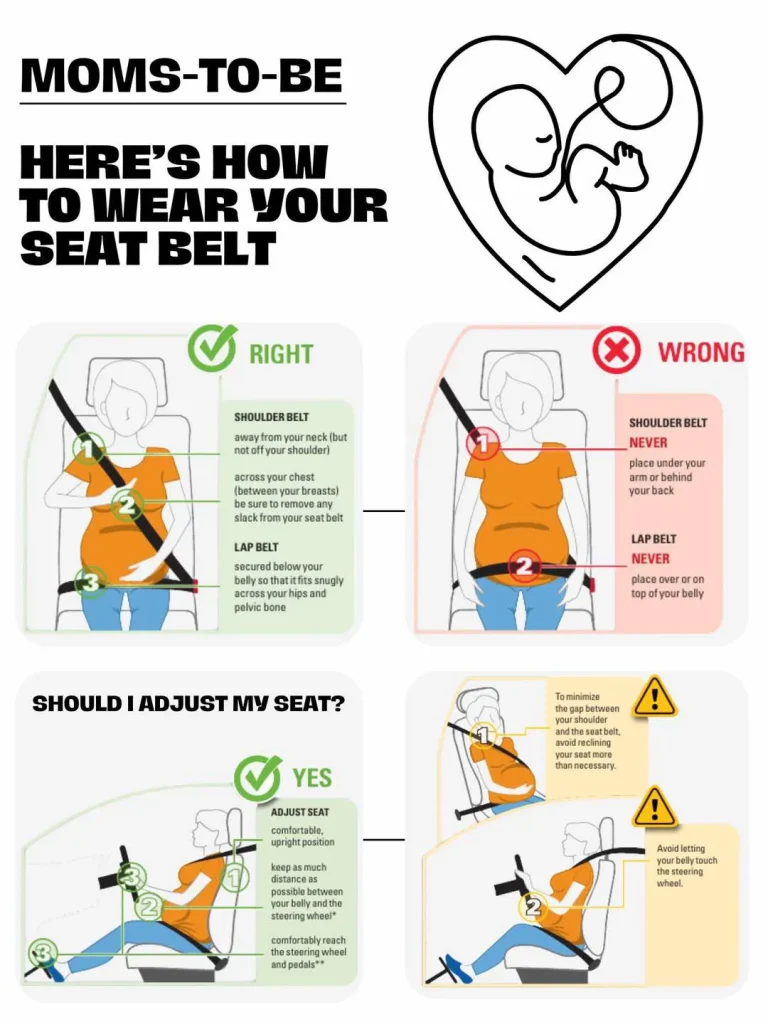
Wear both the lap and shoulder belts every time you travel. Place the lap belt low and flat across your pelvic bone/hips, beneath your belly. Place the shoulder belt across your chest (between your breasts) and on your shoulder. Never place the belt across your belly, under your arm or behind your back.
Yes, seat belts are safe and lifesaving for elderly drivers and passengers, remaining the most effective way to prevent fatal ejections and severe injuries in crashes. However, because older bodies (particularly those with conditions like osteoporosis) are more fragile, standard seat belts can sometimes cause collateral injuries (like rib fractures) during a sudden stop or crash. We encourage you to talk with your primary care physician for additional tips on staying safe.
Children with special needs must use size- and age-appropriate restraints unless exempted by a physician. Specialized guidelines recommend adaptive medical car seats, transit-tested travel vests, or wheelchair tie-downs that support a child’s needs while meeting Federal Motor Vehicle Safety Standards (FMVSS).